
 english
 Efficient Air Flotation Process
How dissolved air flotation clarifiers achieve optimal separation through optimized design and operation
Microbubble Generation
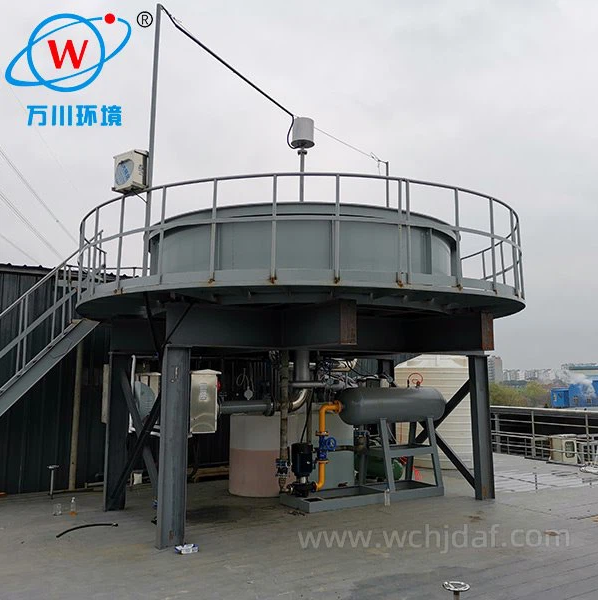
The clarifier uses a pressurized dissolution system where air is forced into water under high pressure in a dedicated chamber. This ensures air dissolves fully into the water rather than forming large, unstable bubbles.
When the pressurized water is released into the flotation tank at lower pressure, the dissolved air rapidly comes out of solution as microbubbles. These microbubbles have a large surface area relative to their volume, increasing the chance of contact with suspended particles.
Charge Adjustment & Attachment
Many contaminants in water carry negative electrical charges, causing them to repel each other and resist attaching to bubbles. The clarifier addresses this by adding coagulants or flocculants.
These chemicals neutralize the negative charges on contaminants, allowing them to clump into larger, denser flocs. The flocs have greater surface area and better adhesion, making it easier for microbubbles to attach and lift them to the surface.
Precise Process Control
The clarifier regulates key factors like water flow rate, pressure in the dissolution chamber, and coagulant dosage. A steady flow rate ensures water spends enough time in the tank for bubbles and contaminants to interact.
Controlled pressure guarantees consistent microbubble size, while proper coagulant dosage avoids under-flocculation (too few flocs) or over-flocculation (large flocs that sink), both of which reduce efficiency.
Structural Design Efficiency
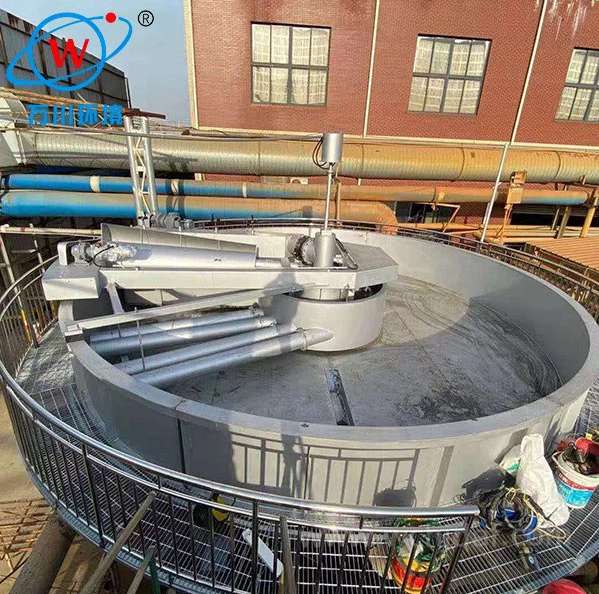
The tank is shaped to distribute water evenly, preventing dead zones where contaminants might accumulate. Skimming mechanisms are positioned to continuously remove the floating scum layer before it can re-dissolve or break apart.
This design ensures that once contaminants are lifted to the surface, they are quickly removed, maintaining the clarifier's overall efficiency and separation performance.
Key Efficiency Factors
- Optimized bubble generation creating uniform microbubbles
- Enhanced attachment through charge neutralization
- Precise control of flow rates and pressure parameters
- Accurate chemical dosing for optimal floc formation
- Thoughtful structural design preventing dead zones
- Efficient skimming mechanisms for continuous removal
- Integration of all components working in tandem