
 english
 Shallow Air Flotation Machine
A highly efficient water treatment system that uses microscopic air bubbles to remove contaminants through optimized shallow tank design
1 Air Saturation Process
The process begins with the preparation of air-saturated water: a portion of treated water is pumped into a pressure vessel, where air is injected and dissolved under pressure. This creates a water-air mixture saturated with dissolved air.
2 Bubble Formation
The saturated water is released back into the shallow treatment tank through nozzles. The sudden pressure drop causes dissolved air to form microscopic bubbles that attach to suspended solids, oil droplets, and other contaminants.
3 Contaminant Separation
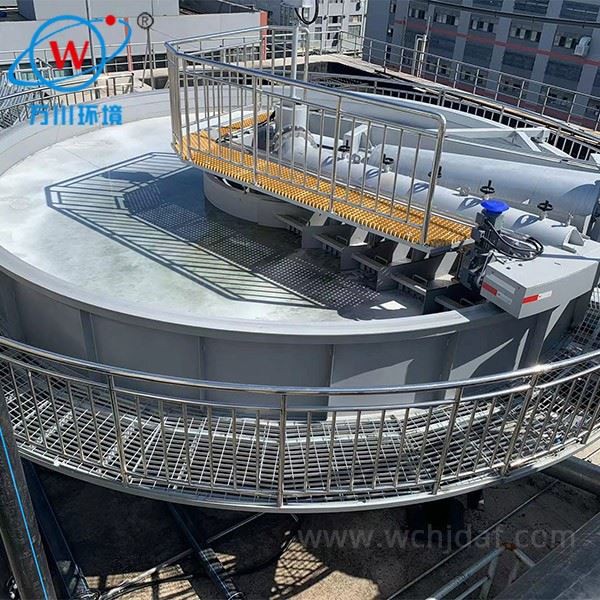
The shallow tank design ensures minimal rising distance for bubbles, reducing separation time and preventing bubble-contaminant detachment. As bubbles rise, they carry contaminants upward to form a floating sludge layer.
4 Sludge Removal
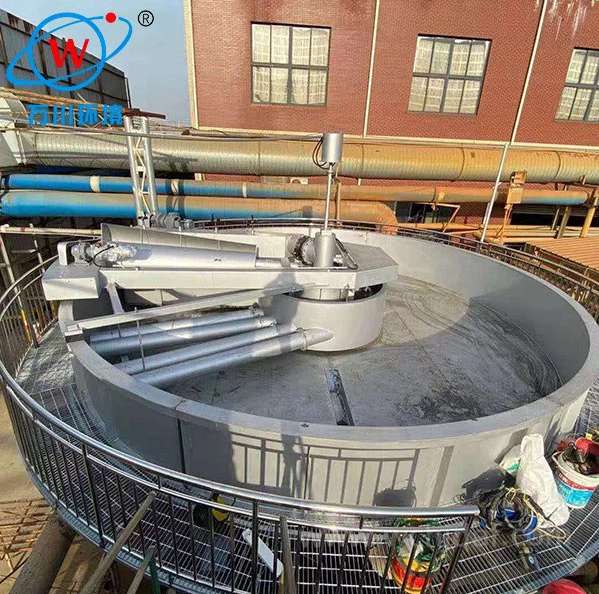
A rotating skimming mechanism continuously removes the floating scum, directing it to a collection trough for disposal. Treated water flows downward through the tank's lower section for collection and discharge.
Key Efficiency Factors
- Streamlined water flow prevents swirling and dead zones
- Even contact between bubbles and contaminants
- Pre-treatment coagulation/flocculation stages
- Chemical addition to clump small contaminants
- Enhanced capture of fine impurities
- Continuous skimming mechanism